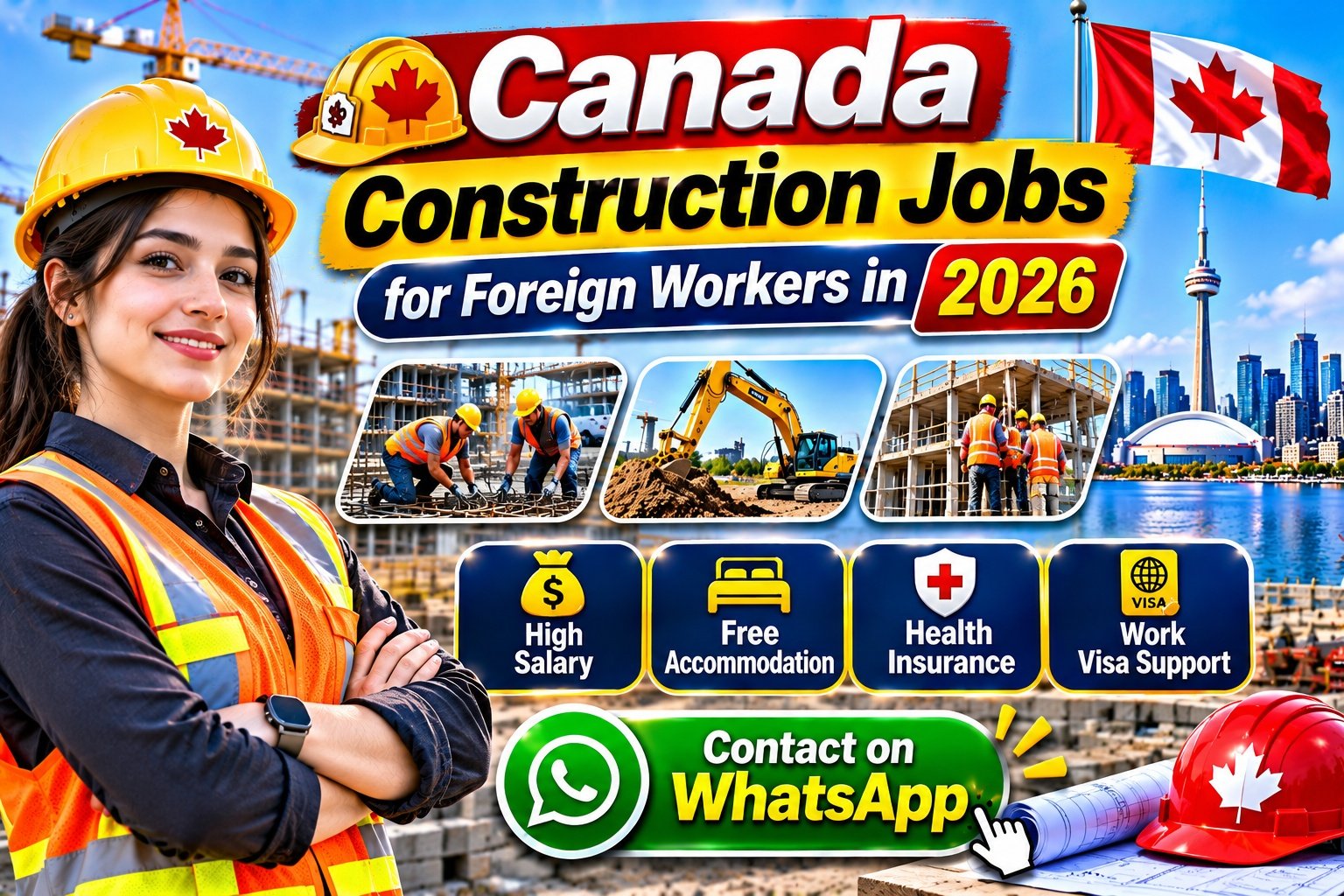
Germany’s Construction Industry and Employment Opportunities
Germany has a major construction industry covering residential buildings, commercial developments, industrial facilities, and infrastructure projects.
The country offers career opportunities for skilled tradespeople and technical professionals who have relevant qualifications and practical experience. International workers may explore positions in construction management, civil engineering, electrical installation, plumbing, welding, and building maintenance.
Germany can be particularly attractive to applicants with vocational training or technical qualifications. However, understanding German workplace standards, language expectations, and immigration requirements is important before applying.
This article highlights construction occupations worth exploring in Germany in 2026 and explains how foreign workers can prepare for employment.

Construction Careers and Estimated Salaries
Construction Site Manager
Construction site managers coordinate workers, monitor project progress, and ensure that construction activities follow approved plans and safety requirements.
They may supervise residential developments, commercial buildings, and infrastructure projects.
Estimated annual salary: EUR 55,000–90,000.
Civil Engineer
Civil engineers work on the planning, design, and supervision of buildings, roads, bridges, and other infrastructure.
Candidates with relevant engineering qualifications and experience in structural design, construction supervision, or infrastructure development may be suitable for specialized positions.
Estimated annual salary: EUR 45,000–75,000.
Electrician
Electricians install, maintain, and repair electrical systems in buildings and industrial facilities.
Foreign applicants should check whether their qualifications are suitable for the intended role and whether the position requires formal recognition or additional authorization.
Estimated annual salary: EUR 35,000–55,000.
Plumber and Heating Technician
Plumbers and heating technicians work with water supply systems, drainage networks, heating installations, and building services.
Experience with modern heating systems and energy-efficient building technology can be useful for certain positions.
Estimated annual salary: EUR 35,000–55,000.
Carpenter
Carpenters construct timber frameworks, install building components, and perform structural or finishing work.
Candidates with vocational training and experience in reading technical drawings may be suitable for construction and renovation projects.
Estimated annual salary: EUR 32,000–50,000.
Welder
Welders join metal components used in industrial buildings, structural frameworks, and infrastructure projects.
Employers may look for practical welding experience, technical training, and familiarity with workplace safety procedures.
Estimated annual salary: EUR 32,000–52,000.
Heavy Equipment Operator
Heavy equipment operators work with machinery used for excavation, material handling, and site preparation.
Relevant operating experience and appropriate safety training may help applicants qualify for suitable positions.
Estimated annual salary: EUR 32,000–50,000.
All salary figures are approximate gross annual estimates. Actual pay depends on qualifications, experience, region, employer, and collective employment agreements.
What Foreign Workers Should Know Before Applying
Germany has different requirements for professional occupations and vocational trades.
Applicants should research the qualifications required for their intended position and determine whether their existing certificates need recognition.
Useful preparation includes:
- A CV describing relevant work experience.
- Vocational certificates or engineering qualifications.
- Employment references from previous employers.
- German-language skills where required by the employer.
- Evidence of technical and workplace safety training.
- Information about qualification recognition and work authorization.
Some occupations may require formal recognition of foreign qualifications, while requirements for other jobs can differ.
German Language Requirements
German-language skills can be important for construction employment.
Workers may need to understand technical instructions, safety procedures, construction drawings, and communication with supervisors.
The level of German required depends on the position and employer. Engineering and management roles may involve additional communication and documentation responsibilities.
Applicants should review the language requirements stated in the job advertisement before applying.
How to Find Construction Jobs in Germany
Start by researching construction companies, engineering firms, and reputable recruitment platforms.
Search for positions that match your professional experience and qualifications. Review the employer’s requirements carefully and check whether the company accepts applications from candidates living outside Germany.
Prepare a professional CV and include your previous projects, technical skills, training, and employment history.
Before accepting an offer, confirm the salary, working hours, employment conditions, accommodation arrangements, and the process for obtaining a work visa.
Germany’s Skilled Worker Immigration Pathways
Germany offers several immigration pathways for qualified international workers.
The Skilled Immigration Act has expanded certain opportunities for people with professional qualifications and practical work experience.
For example, Germany’s practical professional knowledge pathway may allow eligible applicants with a recognized qualification from their country of training and relevant work experience to qualify for employment in certain non-regulated professions. Specific salary and experience requirements apply.
Official information about Germany’s skilled immigration rules is available here:
https://www.make-it-in-germany.com/en/visa-recognition/skilled-immigration-act
Applicants should check the current rules for their occupation and circumstances before applying.
Frequently Asked Questions
Can foreigners work in construction in Germany?
Yes. Foreign nationals may qualify for construction employment if they meet the job requirements and obtain the appropriate work authorization.
Is German language knowledge compulsory?
Language requirements vary by employer and occupation. German is useful for workplace communication and safety, particularly on construction sites.
Do construction workers need a university degree?
Not always. Many construction trades rely on vocational qualifications and practical experience rather than university degrees.
Which construction jobs offer higher salaries?
Experienced site managers, civil engineers, and specialized technical professionals may earn higher salaries than entry-level workers.
Conclusion
Germany offers a range of construction career opportunities for qualified foreign workers in 2026. Skilled tradespeople, engineers, and experienced construction managers can explore employment in residential, commercial, and infrastructure projects.
Before applying, candidates should research qualification recognition, language requirements, and the relevant immigration pathway.
Disclaimer: This article is intended for general informational purposes. Salary estimates are not guaranteed, and visa requirements may change. Applicants should verify current information through official German government sources and prospective employers before making employment or travel commitments.